Showing posts sorted by relevance for query outhousing. Sort by date Show all posts

Thursday, December 3, 2009

Consumer II

Moral: Wherein the consumer needs resources to perform the role. From whence comes these? Wages (implies jobs), Returns, Rents, Debts, ...

---

As said before, there's lot to the topic. If people didn't consume, what would drive the economy? Well, we can discuss that at another time (Todo #1). Throughout this post, other topics are identified for further attention.

In the meantime, we can recall Maslov's contribution to the subject, via his hierarchy. The most basic consumption is for health and welfare, including housing, food, and such. Then, all sorts of discretionary things stack up after that.

Which brings up this question, can a subdued consumption pattern sustain a happy life? An associated question is, can one stay within one's means and be happy? Does this not lead to a certain degree of independence? (Todo #2).

Many possible variations exist to the theme of consumption, but, a topic to cover now, since Washington is heavy into these discussions due to the large unemployment rate, concerns jobs. As, without jobs, with what do we consume?

As an aside, wage is generally the major factor for labor and can spawn interminable discussions. However, the model ought to consider, too, 'rent' as it may apply to labor, within the context of a society. Seems that the best-and-brightest have already figured this out. This needs further discussion (Todo #3).

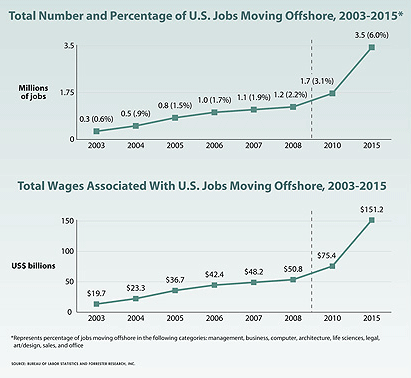
Now, one factor in US job availability is globalization, now the new colonialistic scheme. Recently, PhilG's blog mentioned that even Sikorsky is making things abroad, and they're heavily defense oriented (mind you, paid by taxpayer dollars). That is, the US Defense has farmed out oodles of work. In particular, Sikorsky has producing plant in China.

Looking at the post, and the comments, sort of motivates this post, as the issue of outhousing is still very much open (Todo #4).

There has been a lot of talk about how US consumers have gone too far, to the point of massive debt and to thinking that their houses were ATMs. (We need to look at those who lure the consumer into debt, too -- see this piece found at Philg's.). Okay, we have more savings being reported, now over the past year, which bears some discussion (Todo #5). Yet, it is reported, too, that other countries save more, in particular we hear China and India mentioned.

Well, we must consider that China and India differ from the US in many cultural ways that are very important. For one, neither of these nations can claim a ‘dream’ for its people (no matter how tenuous this might seem in reality for most US citizens). Or, in other words, who is beating down the door to move there in droves? Too, in the case of China, the government is forcing the savings. How many trips have there been to China, on the part of the US, to talk them into letting their people spend?

Oh yes, American business people are beating down the doors. Are these not the new colonialists?

Both countries have cultural and social problems that bear attention. A Business Week article mentions a police officer in India, living under a bridge. He's quoted as saying that a swank hotel won't even let them use the toilet.

The US may not be perfect, however we do have some things going for us. Labor, those who are now without jobs, do have rights such as those mentioned in the Constitution. One problem right now is that the upper classes, supposedly those favored in the Capitalist's view, are very good at diminishing the rights of Labor and, at the same time, in arguing why their take (sometimes, outright thievery) is that which the law condones. (Todo #6).

So, as old man Ford is quoted as saying, we need to pay the workers in order to have them buy stuff. Of course, in his day, 'stuff' was not inferior, throw away, imports (Todo #7).

Remarks:

12/13/2011 -- McKinsey report shows that households hold over 40% of the world's wealth. Hence, the consumer as the major influence on the economy. Now, consider that the household wealth collection (using income in the U.S. as a proxy) is skewed to a very small bunch.

12/09/2009 -- Cannot sustain the consumer with debt.

12/04/2009 -- Frugality as a way to riches.

Modified: 12/13/2011

Tuesday, February 15, 2011

Profits are what? Or, Gravy train II

Moral: Wherein we diverge, a minute, from the slow trek toward a position that is reasonable, and well-founded (knowledge, imperatives) with regard to that which everyone would hope is fair and just, and that honors Adam Smith and other thinkers; we pause just to ponder a few things.

---

Such as profits and other illusions associated with the cap-ital-sino and its gravy trains.

Why ask about profits? A recent Vanity Fair article discussed how the Irish are paying more through the nose than are the Americans (though, it is debatable when you think of the largess of Big Ben to business (hey, guy, some of the supposed little folk are as capable and mindful than are those who are milking the land of honey -- one difference, 'tude!) and of the mountains of debt being pushed out to the future generations), for the dumb (outright stupid, okay?) actions of those who were handling the monies (and who have no sense of 'on the behalf of"). Yet, the Irish are not complaining about their huge burden or about their stalled economy. Well, in the article, some old banker is asking a hot-shot about expected returns which were in the double digits (of course, before the fall and bail out). The old guy said, how is that? Meaning, of course, that long-term, sustained returns for a good bank would be not far above 5%.

Anything above is suspicious, non-sustainable, and downright anti-human. Yes.

---

Gosh, any saver can tell you what it is like to be sacked, thanks to Big Ben.

---

What are reasonable profits? Mind you, before you answer, many occurrences of large returns may be accompanied by luck (hence, not repeatable), malfeasance (Made-off is only one example, cooking the books has many connotations), and other deleterious characteristics. Show me an honest firm, working within the constraints of near-zero, who has sustainable success beyond a mere generation or two?

---

But, other things go into obtaining profits, such as outhousing and the like. Too, we have pushing the boundaries of cutting (see Toyota, as an example) so as to reap returns. Many times, such reduction methods can push toward a serious reduction in quality.

Why is this of interest? Well, a recent experience, involving a Sealy sham, brings this to the fore. Does diminishing of repute mean anything? At some point, one would think that good will would get chewed down to the bone.

It seems that jumping from a defensive mode to that of attacking the consumer is the preferred approach. In a sense, turn a blind eye to problems. At the same time, institute insurmountable obstacles for rectifying failed items.

---

But, as we know, generally, out-sized returns happen daily. From where I sit, many of these are being pulled in by those who run things. Is that not crappy or what? Gravy train? Or, those involved have some special situation (as in, the global elite) that allows the money to flow like a huge river.

Perhaps, some type of balance is obtained if those with the dough turn around and offer a benefactor's hand to the less fortunate. I wonder if Buffett could take time to discuss, and look at, a sustainable economy (I don't mean more for your pocket, Warren)?

---

It is obvious that some type of insight goes along with the luck. Can that be taught? Well, plenty seem to think so (there are many buying the training, many offering the training). Too, the reward may go to the risk, yet there is risk and risk. What we have seen, more than necessary, is risk spilling over to others, of late. In fact, what risks can be associated with our mortgaging the financial lives of those to come?

Remarks:

07/22/2015 -- Some of these are, now, poster boys.

05/17/2011 -- Golden sacks (leftmost mug of the rogue table), by Rolling Stone and Daily Ticker.

04/20/2011 -- Simple living (see Remarks 04/15/2011 - game theory), as opposed to greediness.

03/23/2011 -- The hopes spring, again, forgetting, of course, near-zero, all because of M&M. See the real story. But, Big Ben ought to know better.

03/16/2011 -- On the rise of the professional politician (will there ever be the citizen polico? that is, those who do not salivate when a buck is passed beneath the nose) toward robber barony. The M & Ms are apropos. As well, need to bring in Schervish's viewpoint.

02/24/2011 -- People matter.

02/16/2011 -- Ah, yes. The morning's paper has a couple of stories that we'll have to expand upon. We did miss the 'nationalization' chance two years ago. Too bad.
  • NYSE's moves -- as the thing says, computers run (rule) the realm. Which means, essentially, the fat cats, and their techie wizards, collect their fees (huge sucking machine).
  • Golden sacks -- speaking of fees, and windfalls (Gravy train?).
  • Middle class -- disappearing act
Both of these are only a small sampling of many things that ought to be looked at.

Modified: 07/22/2015

Tuesday, February 1, 2011

The real basis for capitalism, III -- technology

Moral: Wherein we continue the slow trek toward a position that is reasonable, and well-founded (knowledge, imperatives) with regard to that which everyone would hope is fair and just; we do this in order to honor Adam Smith and other thinkers.

---

As with knowledge, there is much to look at with respect to technology and economics. Going from an assumption that capitalism and democratic principles have an almost visceral connection to human nature will give a very broad basis indeed for us to work with.

---

However, for starters, let's look at a list, albeit seemingly disjoint, of topics of interest to the topic.
  • We all know what has happened since the US DOD let TCP/IP loose upon the world in terms of an explosive growth toward ubiquitous communicating and computing, with one recently emergent player (relatively - in time) now having hundreds of millions of registered users. The success of that realm, related to virtual spaces, helped spawn outhousing, new ideas, idiotic notions that lead toward zombies (those to whom cyberspace is more real than their own butts), and much more. That metric properties would be interesting ought to have been foreseen. Such numbered looks have a life of their own, somewhat. But, they can be more fun than that hype which the market information (these tell us little about value, see Remarks 02/01/2011) systems spin out daily. Even with its huge user base, Facebook is not number one. Yet. Right now, Google accounts for several Top Sites entries.
  • Now, we have users, and we have developers. Many in the former camp (for the latter, see next bullet) have no clue about what is going on under the hood; nor, is there any apparent way to generate any interest (surmised by usage patterns of the many). Yet, 'code as reality' (and this is from an old guy here who has done computational mathematics for a few decades upon the ever-changing technical frameworks that evolved during the period) suggests that some modicum of interest will be required (truth engineering). That is why educational efforts will (ought to) be of interest. Phil Greenspun's report on his database class is an example. Besides the technical issues, Phil considers related matters, such as the NoSQL concept (mentioned solely for the fact that no technical topic is without some type of controversy - ah, human nature, again). And, Phil's ideas about economic problems will be used to add to the discussion.
  • Now, for the second class (developers), not all are out for finding the 'killer app' or for oodles of monies (frankly, simple living, mentioned here before, needs some attention), though effort ought to have some reward that is measurable renumeration'ly. So, who are developers? At one time, they were nerds mainly. That has changed (and can further). So, we have many types. But, let's take Quants (please do) who are they who help 'fat cat' old guys screw the public (yes, let's discuss that, you guys and gals). Now, this old guy has taken some comfort in the fact that undecidable (via the difficulties related to entailment in the real world) walls are not possible to climb. But, from time to time, there are steps forward, such as Karmarkar's work. Yet, those with huge problems still had to be creative in trying to find efficient methods. Then, there is the SOS approach that looks to overcome a whole lot of problems involved with complexity. Of course, the wall hasn't tumbled (unlike the one at Berlin, this is wall is not of human origin). But, hopefully, this work can be used to improve the outlook for both the user and the developer.
  • Using Phil again, and applying some metaphoric link twixt planes and economies, we have this argument related to software flying planes. In case you haven't heard, boys and girls, the capitalists want to have lights out everywhere (factory, cockpit, ...). What are we mere humans to do to support ourselves, be consumers, have a family, etc.? Or, to put it bluntly, the economy is really our's, not their's. Anyway, planes fly by control. People usually make the decisions about those controls in order to effect some purpose. And, planes, while being a system of complicated pieces and not for the novice (lots of training and practice required), are less complex than an economy (or even pieces of an economy). We try to control things economic; how well does that work, Big Ben? Too, though, with things economic we have seat-of-the-pants operations (or is it fly-by-night?) to complicate matters. Where can there be any scientific, and engineering, effort (consider this rhetorical, but please try to think about sandboxes and their necessity)?
  • ... 
Remarks:

07/30/2013 -- The future: economy and technology.

06/11/2013 -- CDOs and tranching, once again.

06/05/2013 -- Singularities (understanding how and why these arise, how to manage) will be of extreme importance. Hint: related to computability but concerned more with what might be termed "vertigo" (subtle, yet not).

05/28/2013 -- Discussion will continue under cosmology of business. This has been a popular post, of late. It is an open subject that will be looked at again and again.  

11/15/2012 -- SumZero, and more.

04/20/2011 -- Simple living (see Remarks 04/15/2011 - game theory), as opposed to greediness.

04/03/2011 -- Need to look at some background. Too, tranche and trash.

02/26/2011 -- Technology will be important. But, for the benefit of people.

02/01/2011 -- Note, we'll get to comparative advantage (See Comments at Phil's post on Ford's giddy investors), to boot. Here is an on-line book about theory of trade.

Modified: 07/30/2013

Wednesday, May 22, 2013

Cosmology of business

Moral: Wherein we start anew; after all, at some (near future) point, we'll have post-Ben's largesse.

---

Foreword: A cosmology? Yes, think of those dealing our questions about Nature and our part of it. The normal progression, as humans, is toward thinking about why rather than the how. Fortunately, only a few move toward the spaces of abstract'd nonsense, yet we do get little nuggets from that interest from time to time that is exploited, for better or for worse (we'll go into this, too). So, from this rarefied view, one sees a lots of prancing around like a guru, or more humble presentations that express the necessary awe, or even some views that if they were expressed on Main street would get one institutionalized (oh wait, many of these characters are part of our grandest of institutions -- but, you get the drift).

Which then brings in business which is an extreme form of opportunism. As thinking people know, there is business as it is and business at it could be (ought to be, several connotations of all of this are problematic). Our banes from this whole set of endeavors? Well, human nature is one, but we can learn to lean toward sustainability, in the longer run. There are many more (we'll get into this, too). Must mention one, though: business as is provides a firmament for the "Jamie" types of the world to shine (ah, as if we're to be bedazzled). Having written, have to almost juxtapose here and mention Golden Sacks (lots of mentions of them). When I feel comfortable with them as a wonder poster boy, they throw out a new wrinkle: support for mini-loans (changing spots?).

Not that there haven't been thoughts expressed about what we'll cover, that is, theories abound (economic, financial, etc.). Many of these are considered to be classical. But, with the advent of the 21st century, we can now do a re-look. And, there have been re-looks; none have the flavor to be expected to be expounded here.

The word: There has been some effort at preliminaries the past few years. For instance, the series dealing with capitalism is apropos. Too, Ben has been an interesting subject, though we couch things more in terms of post-Ben, than not. Things will get technical, from time to time (more than to date). Ca-pital-sino, as a concept, will be updated.

Aside (we'll have lots of these): As we all know, OKC had a natural event which was tragic. These happen; people, and their economy, pick themselves up, clean up, and go on with their lives (perhaps, learning something). It's been that way for the duration of mankind's existence. And, we all help. We ought to expect it. Like the National Guard being called for security, etc. Too, we have government agencies. Which, by the way, can be cut. Yet, our responses to these tragedies ought to have high priority. There was a case of a business being hit by a tornado, suffering damage, but recovering in the matter of a weekend with no loss in their work flow (not excessive damage, and no machinery was put out of commission - a hit, nevertheless). One paper showed some Congressional members talking about the largess (overly) give storm victims. Yet, we have now five (count 'em) years of largess to business (of certain types) with no end in sight. Yes, largess to the business buddies is find; forget the little people (who loom larger than many think, we shall show). You see, what is intended with the cosmological view is very much timely.

Afterthoughts: Speaking of time, what is the schedule of this grand undertaking? Well, it has already started and will continue. The comments, earlier, about PTIME apply (half in jest). We will be challenging the views of those who have misused our prowess; that is, all sorts of incidents lurk; some of these can be talked about in the sense of the existence of singularities. Think of it this way. It's okay for the likes of Roger Penrose, (no criticism of the guy; his take on cyclic cosmology resonates) and others, to talk about their statistical studies. Why? They wouldn't have anything without that type of manipulations. Besides, it allows them to be pseudo-scientific in regards to observation and measurement. Also, what they work with are various measure of things that go back to natural phenomena. But, for business types to think that they can rest useful (beyond exploitation, okay?) arguments on similar techniques is way off base. And, to then run things by computation is way out of line. We'll show this (patience - we're not after helping people grow their pocket size).

---

Brief start; it'll continue. It's interesting that the D.O.W. and its companions lost footing after Ben spoke. If only it was due to those in the game considering things wisely. Rather, the slippery slope titled a little. No doubt, we'll see Ben rush to their rescue (that is, pick things up, check the training wheels, etc.) within the next few days.

Remarks:

08/28/2013 -- Cosmology has been mentioned several times in post this year: Transitions, Zeno in the modern context, Ben and the taper, and others. We will get  back to this topic and build constructively from principles.

06/05/2013 -- Singularities (understanding how and why these arise, how to manage) will be of extreme importance. Hint: related to computability but concerned more with what might be termed "vertigo" (subtle, yet not).

05/30/2013 -- We have several themes to address, not the least of which is the growing computational hell that may very well be exacerbated by outhousing.

Modified: 08/28/2013

Wednesday, May 29, 2013

To computational hell and back

Moral: Wherein we pause our look at foundations and consider a collateral subject: the mess that we are in.

What mess? The DOW hit a record recently. Isn't that special?

Well, as Ben knows, such milestones don't really put any bread or butter on the table of a whole lot of folks. Rather, the game enriches the few (comparatively --- to those who would quibble, ever look at the 60-percent level -- more or less -- and below?).

---

And, to hell? Yes, let's hope that we can get back.

---

Business offloaded customer support, with a process that started a long while ago. Any idiot (such as myself)  knows when there is more to communication than a common language. I got to the point where I don't talk to the person unless I perceive some understanding of the American way (we'll go into this later, at detail).

Now, some of the better businesses have been bringing things back. For American consumers, that would be a good thing. As, that means jobs.

Along with the off-shoring, business have been spawning off computational processes (and apps) without any feedback from the users, except ex post facto. I'm talking specifications here, folks, But, the elite might say that such thinking is out-moded. As in, let the money drive things (we'll get into this, too -- Note: 05/30/2013 - people say that we're being driven by machines (which are out of control); one way that this happens is that the big software people (you know who you are) push out changes to which we have to adapt - the notion is that it's a market-type choice - nothing could be further from the truth).

Doing systems correctly would create American jobs. We can discuss this. And, doing them as is really needed will be costly. The trouble is that the market (which is what? little players (meaning, character - they have bucks galore) who must have their training wheels in place - put there by Ben, of course) and its apparent success seems to work against the reality. Until, there is a crash. But, then, the same old crap starts again (Note: 05/30/2013 -- not only are people supposed to bend to the whims of systems, and their purveyors, we're to pick up the crap when they fail -- and building giant sucking machines upon quaky foundations leads us (always) to just that: regular clean-up of the diapers).

I'm talking from a framework that is outside the crappy part, folks. The financial industry does not want to look at matters from that perspective - it's too much fun rolling in the dough as is happening now with Ben's input (and largess).

---

That lead-in touched on one type of hell. Others are there and abound. One example is the credit handling via the Big-3 (Equifax, et al). Just recently, I ran across a case where someone is seen as dead by these Big-3 (idiots?). The reason is that one creditor reported the guy as such. What had happened is that the guy's wife died. In the process of notifying creditors of such, one of them took the person who was deceased to be the guy, not his wife. From that little thing ensued turmoil that has lasted months.

I talked to one of the Big-3 today. They can see that they're getting reports monthly from this guy's creditors about his activity. The account at the one who has him dead had been inactive for a long while; so, there was no activity to report there anyway.

In terms of process for the user, this Big-3 member ought to be able to let the guy dispute the error on-line. But, they won't do that without him proving who he is (soc sec card, et al). You know why this is stupid? The guy is a Viet Vet, was born here, lived here, paid taxes here, raised his kids here, and so forth. Too, he's  getting a Soc Sec check every month. The bank that gets that deposit knows this. Do they help the guy? No, they say that the Big-3 drive things.

Okay, Big-3, and bosses thereof. If you are going to be so central, should you not do it in a user-friendly manner that is fair, secure, and robust? (Now, all of you wags that are rolling on the floor, behave yourselves - they, the Big-3, cannot be total idiots - after all, they did get themselves a shared monopoly) Where the heck is the Consumer Financial Protection Agency (Note: 05/30/2013 - they never responded to me on FB -- usual government modus operandi?)?

---

You see, the whole thing harks back to the time when people believed what the computer said. That went on for awhile. Computers don't error, was the thought. Then, there was the realization of garbage in/garbage out. That is, junk begets junk. Don't laugh, folks. That forward step took awhile.

Now, it seems, that we're back to the belief stage. As in, the computer is the reality. It's a map/territory problem. Why this fall back? Complication, essentially. This will be a central theme to expand upon here. As things mix up, it causes so many to put their heads into the sand (do what the "man" says).

Aside: If it is not obvious, note that I've been in this industry for awhile in roles that were multiply varied, multi-disciplined, and, for the most part, of highly technical focus - with some back slapping as is the want of the likes of Jamie, and his ilk. We're in deep doo-doo, now. The kids (Zuck and the like - keep putting out things that flash - what is their basis? -- oh, I don't need to know, you say?) are perturbing things in ways that will have future implications. Singularity potentials are piling up (see Remarks 05/21/2013).

Mind you. There has been real progress (we'll go into that, too). After all, a lot of good comes from the networking methods, the cloud, and such.

---

For many, all of the flash and toys are entrancing (hence, zombies and more). Yet, you would expect, for these, some maturing event, at some point, unless they're completely washed out (possible as we have seen with drugs that alter the body's workings too far). Others have already seen, and experienced, the hell.

But, we could say that it's more like purgatory (look it up) at this point. The hell will result if matters continue to de-evolve as they are.

What do I mean? You know why the web was labeled wild west early on? What was the wild west? You know, too, that it's the largest-held romantic view of the US's history. Who doesn't seem to want to be a cowboy? Not all of us; we ask for acknowledgement the rights of the Natives who were here before. The thing was that misfits, a lot of times, from the east came out here and shot up the place. Law and order was not the norm. It took awhile for this to be established.

Forgetting the conflict with the Natives, when did law and order get set here in the West? Pinpointing around 1900 would be pushing it. We could probably point to the period after WWI and before WWII. Now, at what point is the "wild west" of the web? I don't see us further than right after the Civil War. In fact, have we not even had the Civil War (if you must, think of the free vs not conflict as an analog)?

From whence would come some type of structure and security?

---

With the Big-3, we have them pulling together stuff on us. For those of us who can, we can monitor their activity. Many cannot. Too, though, they do idiotic things like this deceased error. Actually, they ought to offer the guy a membership (30 days would do - or more until errors were properly handled) with which he could challenge their errors.

Remarks:

07/26/2015 -- This has had some recent reads. Lots going on, including poster boys coming out of the woodwork. We intend to get back to this topic: consumer as central to things economic (metaphysically sound).

10/20/2013 -- As of a couple of weeks ago, Equifax seemed to have caused another problem. Idiots. This type of thing, folks, foretells dire consequences for the ordinary populace. That is, entrapped by stupidly developed and released systems will be a common state.

07/08/2013 -- The bank responded to the CFPB query and changed their database. In June. The Big-3? For this little error, they say 90 days. Let's look at what needs to be done with computationally driven systems and processes.

06/04/2013 -- Last week, when the Big-3 problem was first looked at, I sent a note to the bank, Elizabeth Warren, and the CFPB (which is a new organization). I heard from the bank's PR people fairly quickly which is to be expected. Just today, a week later, heard from the CFPB. They sent information about their complaint process. Elizabeth? Nary a peep, yet.

06/03/2013 -- There is a log of activity the past week, on FB.  https://www.facebook.com/jmswtlk/posts/10151477999845847  It's funny about Equifax. I've been trying to raise them via FB, but they haven't made a peep. You see, they could override the death entry and allow the guy to get on-line with their system. We tried this the other day. On result? The Equifax computer system sent a notice about a credit card being renewed after we tried to sign in the guy as a new member. That is, the database sees the activity; the humans only look at the fact of the death. Why? Well, they do have their jobs on the line if they make an error. Too, the process might be too rigid; that is, where some common sense (experience?) might understand an error and suppress it, then it ought to be allowed. Of course, with suitable documentation to allow re-trace (and further correction, even a back-out). Methinks that those who do logic, and mathematics, many times have an unrealistic belief in their prowess (if only they knew --- by the way, singularities, again, are the key item in this and related cases). And, their poor users bear the cost and the pain. ... We'll get back to this (if you're so smart, why aren't you rich?).

06/03/2013 -- On Friday, it was determined that Capital One/ HSBC has sat on paperwork for four months. That is, the error was done by HSBC in Oct, 2012 (erroneous reporting to the Big-3); the error was noticed in Jan, 2013; the error was brought to the attention of Capital One (by mail) in Jan, 2013. It was the end of May before the error was noticed by HSBC, via to a phone call.

05/31/2013 -- The focus might have to be on the Big-3. In cases like this, they ought to allow an override that is quick, as is necessary for the computational age. For some reason, they like to lumber along. Did some bureaucrat lead them to believe this? Now, quick changes can create a hellish situation. Yet, many times, an override by a human will resolve a hellish situation. Both a paradox and a dilemma. The irritating thing is that a little bit of garbage in a database in having real world effect. An override (are you listening Equitfac, etc.) would allow change of that piece of crap, with an explanation, and rationale. Okay? In my case, I'm a member of Equifax (have been since 2005). They know who the heck I am. If I say that someone is next to me and is undead, then my word ought to be taken (verified later, okay?) so as to free up the bottleneck. Sheesh.

05/31/2013 -- When one considers the cost of the necessary framework, that would allow security and sustainability, people have kicked the thing around (WSJ talked about how to control the idiot of North Korea; what about reining in the financial manipulators?). However, the minds are so entrenched in this illusion about which Marx laughed (fictitious capital, for one), it's hard to express a rational stance on the matter. You see, people are experimented with big time. It's really analogous to that concept so familiar from warring, namely cannon fodder. We have our great leaders mouthing platitudes about how they want to help the little guy; most of their efforts seem to move more toward entrapment; take droning (in other than a defensive mode) if you need something to grasp here).

View from 2008 
05/30/2013 -- A case in point about off shoring, saw yesterday that some mortgage foreclosure work was being sent to India (Tata was one contractor). It was said that this work was too tedious for Americans. Now, these foreign brains weren't going to make judgments (Tata's words, paraphrased). No. The thing was to get all the paperwork together, verified, and provided to a banker in the US who would do the dirty deed. That whole rationale was bothersome. For one, those there in India only need to look outside their office (even if it's isolated in a privileged environment) to see their 3rd world fellow citizens. Of course, doing American work lifted out a few. But, the majority? Besides, these types of roles could very well be performed by people here. ... Not anti-outhousing, rather putting this here as we'll have to address the whole phenomenon while looking at foundation'al issues.

05/29/2013 -- Singularity? Yes, this will be an important subject. You know what? I don't think that Jamie (and his ilk -- who, by the way, was vindicated according to the WSJ) would understand the concept. The fat whale (whatever) was a small incident compared to that which we need to put our attention.

Modified: 07/26/2015